What Is Conversion? A Simple Explanation for Business Owners
What is conversion and why does it matter for business growth? Learn how conversion rates work, where companies lose customers, and how to improve sales funnels with automation and lead management systems
Many business owners focus on traffic, views, followers, or ad impressions. But in reality, one metric matters far more:
How many people actually take action.
That is what conversion measures.
You can have thousands of website visitors and still struggle with sales. On the other hand, a business with smaller traffic but a strong conversion rate can generate significantly more revenue.
In this article, we will explain:
- what conversion means;
- how conversion rates work;
- different types of conversions;
- where businesses lose customers;
- how to improve conversion in practice.
What Is Conversion?
Conversion is the percentage of people who complete a desired action.
That action can be:
- submitting a form;
- sending a message;
- booking a consultation;
- subscribing;
- registering;
- making a purchase.
In simple terms:
Conversion shows how many people from the total audience did what the business wanted them to do.
A Simple Conversion Example
Imagine:
- 1,000 people visit your website;
- 50 people submit a contact form.
Your conversion rate is:
50 ÷ 1000 × 100 = 5%
This means that 5 out of every 100 visitors became leads.
Why Conversion Matters More Than Traffic
A large number of visitors does not automatically mean strong business performance.
A company can:
- run ads;
- generate traffic;
- grow social media accounts;
and still fail to generate consistent sales.
The problem is often low conversion.
For example:
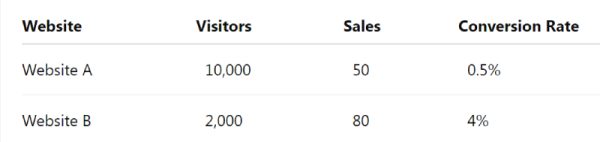
Website B generates more sales despite having less traffic.
That is why successful businesses focus not only on attracting visitors, but also on improving every stage of the customer journey.
Different Types of Conversion
Conversion depends on the business goal.
Lead Conversion
This measures how many visitors become leads.
Example:
- 500 website visitors;
- 25 submitted forms.
Conversion rate:
5%.
Sales Conversion
This measures how many leads become paying customers.
Example:
- 100 leads;
- 12 purchases.
Sales conversion:
12%.
Subscription Conversion
This tracks how many users subscribe to:
- a Telegram bot;
- a newsletter;
- a channel;
- a platform.
Manager Conversion
This measures how effectively a sales manager closes deals.
It is commonly used to evaluate sales team performance.
Where Businesses Lose Conversion
In many cases, the problem is not the product or even the advertising.
The real issue is inside the sales process.
Slow Response Times
If a customer sends a message and waits hours for a reply, many opportunities are lost.
Modern customers expect fast communication.
Complicated Forms
Businesses often reduce conversion with:
- long registration processes;
- too many required fields;
- unnecessary complexity.
The harder the process, the more users leave.
No System for Lead Management
This is a common problem in small and medium-sized businesses.
Typical issues include:
- lost leads;
- missed replies;
- scattered conversations;
- no CRM system;
- no sales pipeline visibility.
As a result, businesses think advertising is failing when the actual problem is internal organization.
No Follow-Up
Most customers do not buy immediately.
Without:
- reminders;
- follow-up messages;
- nurturing sequences;
many potential sales disappear.
How to Improve Conversion
Improving conversion is often cheaper and more profitable than increasing ad spend.
In many cases, businesses can grow revenue simply by improving how they process leads.
1. Respond Faster
The faster the first response, the higher the chance of conversion.
This is why many companies use:
- Telegram bots;
- automated replies;
- CRM notifications;
- AI assistants.
2. Simplify the Customer Journey
The fewer steps users must complete, the better the conversion rate.
For example:
- short forms instead of long applications;
- Telegram communication instead of complicated registration;
- one-click actions instead of multi-step processes.
3. Automate Lead Processing
Automation helps businesses:
- avoid losing leads;
- respond faster;
- organize communication;
- track customer history;
- manage sales stages.
This becomes especially important as lead volume grows.
4. Analyze the Sales Funnel
Businesses should track:
- how many people visit;
- how many become leads;
- how many receive responses;
- how many purchase.
If one stage performs poorly, that is where optimization is needed.
Conversion and the Sales Funnel
Conversion exists at every stage of the sales funnel.
Example:
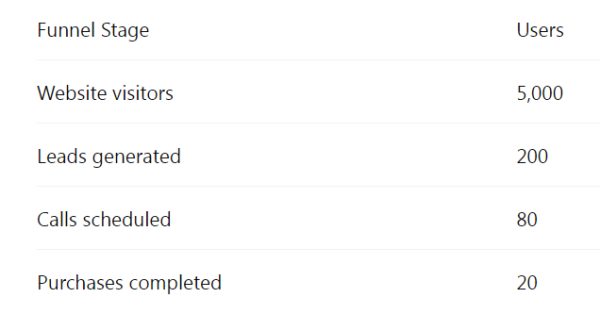
At every stage, some users leave.
The goal of the business is to reduce these losses.
That is why modern companies invest in:
- CRM systems;
- Telegram bots;
- AI automation;
- analytics;
- lead management systems.
Why Conversion Matters Even More in 2026
Advertising costs continue to rise.
As a result, businesses that win are not always the ones with the biggest traffic. They are the ones with the most efficient systems.
Competitive advantages today include:
- fast response speed;
- automation;
- structured lead processing;
- funnel analytics;
- customer communication systems.
Final Thoughts
Conversion is one of the most important metrics in business.
It helps companies understand:
- how effective their website is;
- how well leads are handled;
- where customers are lost;
- how strong the sales process really is.
A higher conversion rate allows businesses to:
- generate more sales without increasing ad spend;
- reduce customer loss;
- scale more efficiently.
If your business already receives leads but sales growth remains slow, the issue is often inside the funnel itself.
BB.Center helps businesses build modern lead processing systems using:
- Telegram bots;
- CRM integrations;
- automated funnels;
- AI-powered customer communication.