What Is a Sales Lead and How to Turn One into a Customer
Learn what a sales lead is, how cold, warm, and hot leads differ, why leads often fail to become customers, and how automation helps businesses turn more inquiries into sales.
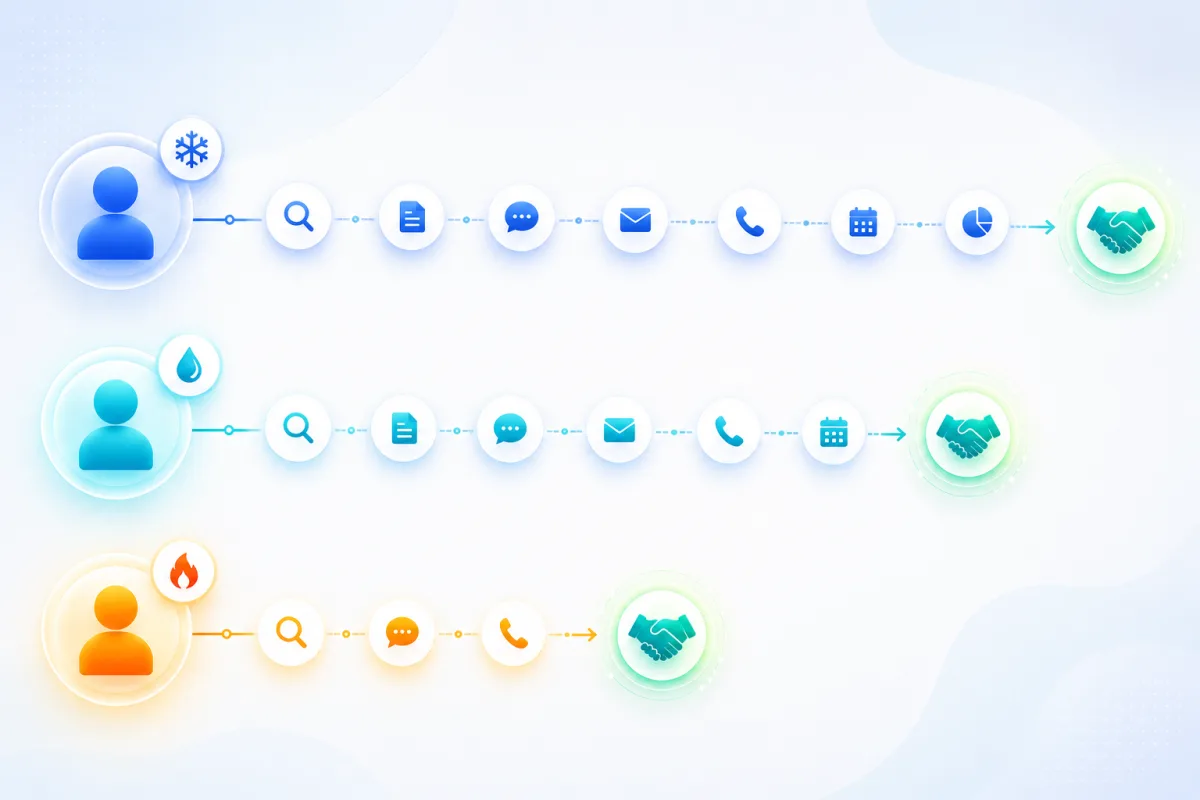
If someone submits a contact form, sends a message on Telegram, or calls your business, does that automatically make them a customer?
Not yet.
In sales, that person is called a lead.
Understanding what a lead is and how to work with leads effectively can help your business increase sales without spending more on advertising.
In this article, you'll learn what a sales lead is, the different types of leads, and how to convert more inquiries into paying customers.
What Is a Sales Lead?
A lead is a person who has shown interest in your product or service.
They haven't made a purchase yet, but they have taken the first step.
For example, a lead may have:
- submitted a contact form on your website;
- sent a message via Telegram;
- called your company;
- requested a callback;
- signed up for a consultation.
Every one of these actions indicates potential interest.
However, not every lead becomes a customer.
A Lead Is Not the Same as a Customer
This is one of the most common misconceptions.
Generating a lead does not mean you've made a sale.
After the first contact, the person still needs to:
- receive a response;
- understand your offer;
- compare available options;
- make a decision.
That's why lead management is an essential part of every sales process.
Types of Sales Leads
Not all leads are equally ready to buy.
They are usually grouped into three categories.
Cold Lead
The person has only recently become interested in the topic.
They are researching the market and are not ready to make a decision.
Warm Lead
The person understands their needs and is comparing different solutions.
They usually need more information before choosing a provider.
Hot Lead
The person is close to making a purchase.
Most often, they want to discuss pricing, delivery times, or final details.
The better your business understands the type of lead it is dealing with, the easier it becomes to choose the right sales approach.
Why Leads Don't Become Customers
In many cases, the problem is not the product itself.
Sales are lost because of weaknesses in the sales process.
Some of the most common reasons include:
- slow response times;
- no follow-up communication;
- lost inquiries;
- insufficient information;
- a complicated buying process.
Even highly interested prospects may choose a competitor if they have to wait too long for a response.
What to Do After Receiving a Lead
Every new lead should follow a clear and consistent process.
A typical workflow looks like this:
- respond to the inquiry as quickly as possible;
- understand the customer's needs;
- recommend the most suitable solution;
- agree on the next step;
- stay in touch until the customer makes a decision.
When every lead follows this structured process, businesses are less likely to lose potential customers, and the chances of converting leads into sales increase significantly.
How Automation Improves Lead Management
In many companies, the first stages of communication consume a significant amount of time.
Sales representatives answer the same questions, collect contact details, and manually record information.
Automation allows these repetitive tasks to be handled by the system.
For example, a Telegram bot can:
- respond instantly to the first message;
- collect essential information;
- ask qualifying questions;
- identify the customer's interests;
- pass a qualified lead to a sales representative.
As a result, sales managers can begin the conversation with all the information they need.
Why Follow-Up Matters
Most leads do not make a buying decision immediately.
Some people need several days or even weeks before they are ready to move forward.
If your business never contacts them again after the first conversation, the opportunity may be lost.
Automated reminders, helpful content, and follow-up messages keep the conversation alive and encourage potential customers to return when they are ready.
How to Measure Lead Management Performance
It's important to measure more than just the number of incoming inquiries.
You should also understand how successfully leads move through your sales process.
Useful metrics include:
- the number of leads received;
- response rate;
- progression to the next sales stage;
- conversion into customers;
- average time to close a sale.
Tracking these numbers helps identify bottlenecks and continuously improve your sales process.
Final Thoughts
A lead is not a sale — it is the beginning of a relationship with a potential customer.
The faster your business responds, understands customer needs, and consistently guides people through the buying process, the higher your conversion rate will be.
Modern automation tools make lead management faster, more organized, and more efficient. Telegram bots, AI, and automated workflows handle routine tasks, allowing your sales team to focus on what matters most: building relationships and closing deals.