What Is a Sales Funnel? Understanding the Customer Journey from Visitor to Buyer
A sales funnel shows how customers move from first contact to purchase. Learn the key stages, where businesses lose leads, and why having leads does not always mean having sales.
Many businesses have a common problem:
They receive website visitors, messages, and even leads, but sales remain disappointing.
When this happens, the issue is often not the product, the pricing, or the advertising. The problem is usually hidden somewhere inside the sales funnel.
A sales funnel helps businesses understand how potential customers move from first contact to purchase. More importantly, it reveals where people drop out before becoming paying customers.
In this article, you'll learn:
- what a sales funnel is;
- how a sales funnel works;
- the main stages of a sales funnel;
- the difference between cold, warm, and hot leads;
- where businesses typically lose customers;
- why "we have leads but no sales" is such a common problem.
What Is a Sales Funnel?
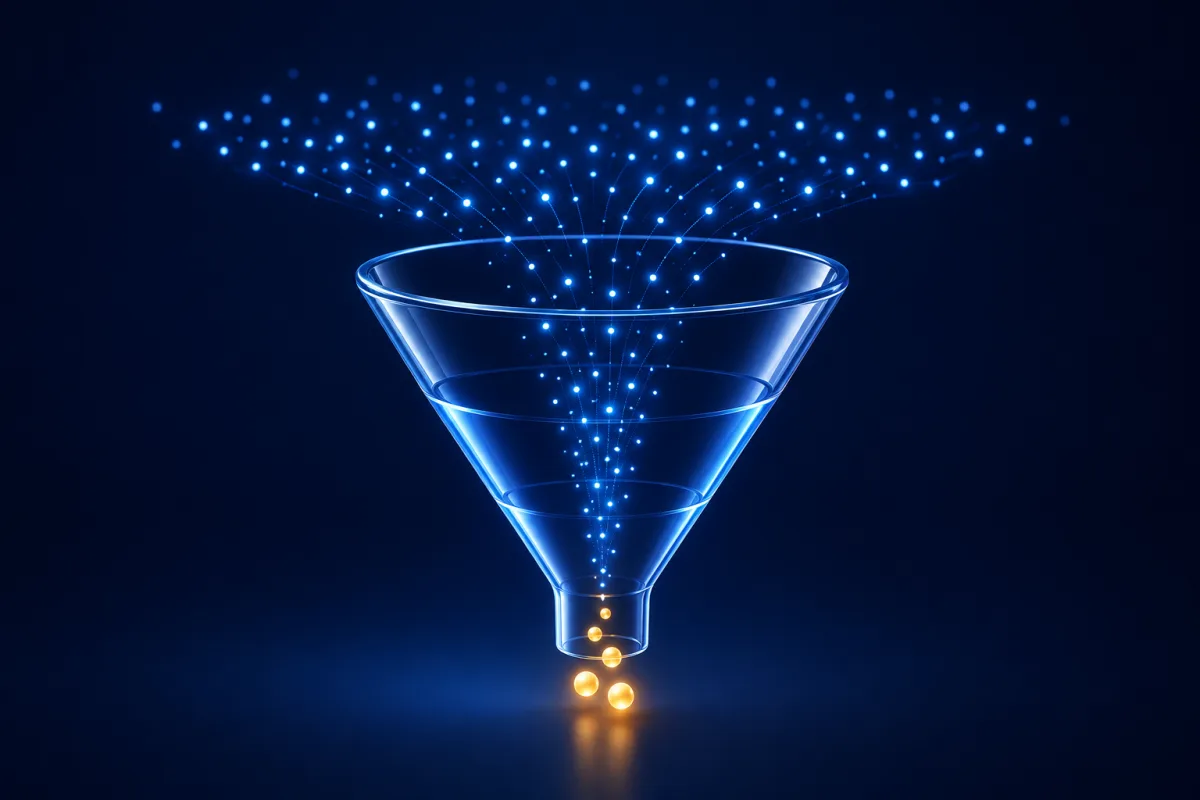
A sales funnel is the path a potential customer follows before making a purchase.
It starts when someone first discovers your business and ends when they become a customer.
The term "funnel" is used because the number of people decreases at every stage.
For example:
- 5,000 people see an advertisement;
- 500 visit your website;
- 100 submit a form;
- 30 schedule a call;
- 10 make a purchase.
At each step, some people leave the process.
A sales funnel helps businesses measure these losses and improve the customer journey.
Why Every Business Has a Sales Funnel
Many business owners think they do not have a sales funnel.
In reality, every business has one.
Whether you sell:
- services;
- software;
- consulting;
- physical products;
customers always go through a series of decisions before buying.
The difference is that successful businesses understand and optimize their funnel, while others operate without visibility into the process.
The Main Stages of a Sales Funnel
Although funnels vary between industries, most follow a similar structure.
Stage 1: Awareness
This is when people first discover your business.
Common sources include:
- Google search;
- social media;
- advertising;
- referrals;
- YouTube;
- online communities.
At this stage, people are not looking to buy immediately. They are simply becoming aware that your business exists.
These are often called cold leads.
Stage 2: Interest
The prospect starts learning more about your business.
They may:
- visit your website;
- read blog articles;
- watch videos;
- subscribe to your channel;
- follow your social media.
At this point, they recognize a problem and begin exploring solutions.
Stage 3: Consideration
Now the prospect actively compares options.
They may:
- request information;
- book a consultation;
- compare competitors;
- ask questions;
- evaluate pricing.
This is where leads become warmer.
The prospect is interested but has not yet committed.
Stage 4: Decision
The customer is ready to choose.
They may:
- request a proposal;
- schedule a call;
- discuss terms;
- review contracts.
At this stage, the lead is considered hot.
The purchase decision is close, but it can still be lost if the process is slow or confusing.
Stage 5: Purchase
The prospect becomes a customer.
Many businesses treat this as the end of the funnel.
In reality, it is often the beginning of a longer relationship.
Cold, Warm, and Hot Leads
Understanding lead temperature helps businesses communicate more effectively.
Cold Leads
Cold leads know little or nothing about your business.
Examples:
- website visitors;
- social media users;
- people who saw an advertisement.
They need education and trust-building before they are ready to buy.
Warm Leads
Warm leads have shown interest.
Examples:
- subscribers;
- people who submitted a form;
- prospects who requested information.
They understand the problem and are considering solutions.
Hot Leads
Hot leads are close to making a decision.
Examples:
- people requesting a quote;
- prospects booking sales calls;
- customers discussing implementation.
These leads should receive immediate attention because they have the highest purchase intent.
Where Businesses Lose Customers
The biggest value of a sales funnel is identifying where customers disappear.
Too Much Traffic, Too Few Leads
A business may attract visitors but fail to convert them into leads.
Common causes:
- poor website design;
- unclear offer;
- weak call-to-action;
- complicated forms.
Leads That Never Receive a Response
Many businesses lose opportunities simply because they respond too slowly.
A lead who waits several hours may already be speaking with a competitor.
Poor Qualification
Not every lead is a good fit.
Without proper qualification, sales teams waste time on prospects who are unlikely to buy.
No Follow-Up Process
Most customers do not purchase during the first interaction.
Without:
- follow-up messages;
- reminders;
- nurturing sequences;
many opportunities are lost.
No Visibility into the Funnel
This is one of the most common problems.
Businesses often know:
- how much they spend on advertising;
- how many leads they receive;
but they do not know:
- where leads drop off;
- which stage performs poorly;
- why sales are not increasing.
Without funnel tracking, improvement becomes guesswork.
Why Businesses Say "We Have Leads but No Sales"
This is one of the most common complaints among business owners.
The statement usually means one of three things:
The leads are low quality
The marketing attracts people who are unlikely to buy.
The sales process is weak
Prospects are interested but are not being guided effectively toward a decision.
The business loses leads between stages
Customers disappear because:
- responses are delayed;
- conversations are not tracked;
- follow-ups never happen;
- no system manages the pipeline.
The problem is often not lead generation.
The problem is what happens after the lead arrives.
How to Improve a Sales Funnel
Improving a sales funnel starts with visibility.
Businesses should track:
- visitors;
- leads;
- consultations;
- proposals;
- sales.
Once the numbers are visible, bottlenecks become easier to identify.
Modern companies often use:
- CRM systems;
- Telegram bots;
- marketing automation;
- AI assistants;
- sales analytics.
These tools help reduce customer loss and improve conversion at every stage.
The Modern Sales Funnel
Today's sales funnels are no longer managed through spreadsheets and manual notes.
A modern funnel typically includes:
- advertising and traffic sources;
- landing pages;
- lead capture forms;
- Telegram bots;
- CRM systems;
- automated follow-ups;
- sales analytics.
The goal is simple:
Move more people from awareness to purchase while losing fewer customers along the way.
Final Thoughts
A sales funnel is the complete journey a customer takes before making a purchase.
Understanding this journey helps businesses:
- identify weak points;
- reduce customer loss;
- improve conversion rates;
- increase sales without necessarily increasing advertising spend.
If your business generates leads but struggles to close sales, the issue is often hidden somewhere inside the funnel.
The businesses that grow consistently are usually not the ones with the most traffic. They are the ones that understand exactly how their sales funnel works and continuously improve every stage of it.