How to Increase Conversion Without Spending More on Advertising
Increase sales without increasing your advertising budget. Learn how faster responses, automation, lead qualification, follow-ups, nurturing, and analytics can improve conversion rates and generate more revenue from existing traffic.
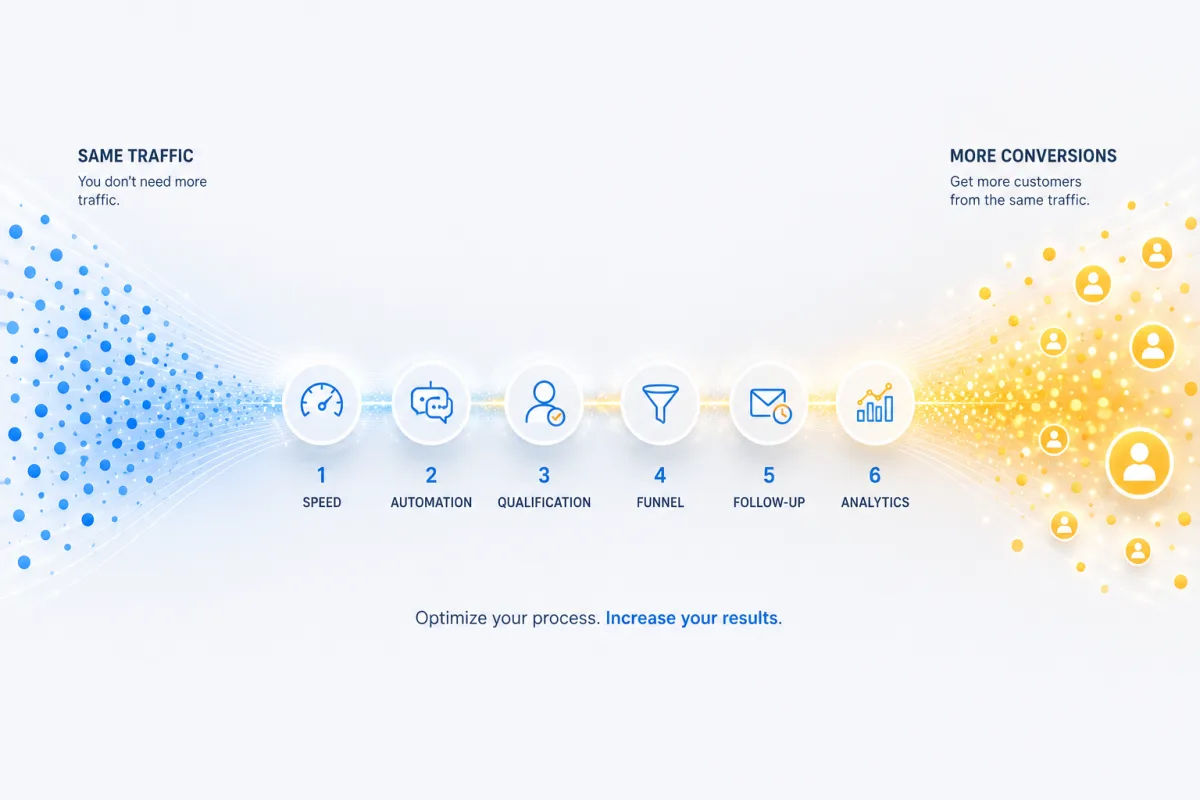
When business owners want more sales, the first instinct is often to increase advertising budgets.
More traffic.
More clicks.
More leads.
But what if you could generate more customers from the traffic you already have?
For many businesses, the fastest way to increase revenue is not attracting more visitors. It is improving conversion.
Conversion optimization focuses on helping more prospects move successfully through the sales process.
In this article, we'll explore practical ways to increase conversion rates without increasing advertising spend.
Why More Traffic Is Not Always the Answer
Imagine two businesses.
Both receive 1,000 visitors per month.
The first business converts 1% of visitors into customers.
The second converts 3%.
The second business generates three times more sales without spending a single extra dollar on advertising.
This is why conversion optimization often produces a higher return than increasing traffic.
Before buying more leads, it makes sense to improve the way existing leads are handled.
Respond Faster
Speed is one of the most important factors affecting conversion.
When someone submits a form or sends a message, interest is at its highest point.
Every minute of delay increases the chance that the prospect will:
- lose interest;
- become distracted;
- contact a competitor.
Studies consistently show that businesses responding quickly are significantly more likely to convert leads into customers.
Practical Tip
Measure your average response time.
Many companies discover that they are losing opportunities simply because replies arrive too late.
Use Automated Responses
Customers increasingly expect immediate communication.
That does not mean a manager must be available 24/7.
Automation can acknowledge inquiries instantly.
For example:
- confirmation messages;
- welcome sequences;
- FAQ responses;
- appointment scheduling;
- lead collection.
Even a simple automated response reassures prospects that their request has been received.
This keeps them engaged until a human takes over.
Improve Lead Qualification
Not every lead is equally valuable.
Some people are ready to buy.
Others are only researching options.
Qualification helps identify:
- real opportunities;
- urgent needs;
- buying intent;
- budget fit.
The better the qualification process, the more effectively sales teams can focus their time.
Example
A business receiving 100 leads per month may discover that only 30 match its ideal customer profile.
Identifying those 30 quickly improves conversion and reduces wasted effort.
Build a Structured Sales Funnel
Many businesses rely on informal processes.
Leads arrive.
Managers respond.
Conversations happen.
Results vary.
A structured sales funnel creates consistency.
Typical stages include:
- first contact;
- qualification;
- consultation;
- proposal;
- negotiation;
- sale.
When every lead follows a defined process, fewer opportunities are lost.
Funnels also make bottlenecks visible.
Don't Forget Follow-Up Reminders
One of the biggest mistakes businesses make is assuming that interested prospects will buy immediately.
Most do not.
People get busy.
They compare alternatives.
They postpone decisions.
This is why follow-up reminders matter.
Examples include:
- follow-up emails;
- Telegram messages;
- consultation reminders;
- proposal reminders;
- renewal notifications.
A significant percentage of sales happen only after multiple follow-up interactions.
Warm Up Leads Before Selling
Many businesses attempt to sell too early.
Prospects often need trust before they are ready to buy.
Lead nurturing helps build that trust.
This may include:
- educational articles;
- case studies;
- videos;
- newsletters;
- useful insights.
The goal is not to push for an immediate sale.
The goal is to help prospects become more confident in their decision.
Warm leads consistently convert better than cold leads.
Use Analytics to Find Conversion Problems
You cannot improve what you do not measure.
Analytics helps answer questions such as:
- Where do leads disappear?
- Which stage converts poorly?
- How long does it take to close a sale?
- Which traffic sources perform best?
Many businesses focus only on the number of leads generated.
The real insights often appear deeper inside the funnel.
Tracking each stage helps identify exactly where improvements are needed.
Example: Increasing Conversion Without More Traffic
Imagine a service company that receives 200 leads per month.
Current performance:
- 200 leads;
- 40 consultations;
- 12 customers.
Instead of increasing advertising spend, the company improves:
- response time;
- lead qualification;
- follow-up reminders;
- CRM tracking.
Six months later:
- 200 leads;
- 65 consultations;
- 22 customers.
Traffic remains the same.
Sales increase dramatically.
The difference comes from better conversion rather than more advertising.
How Telegram Bots Improve Conversion
Telegram bots can support conversion optimization in several ways.
They can:
- respond instantly;
- collect lead information;
- qualify prospects;
- schedule meetings;
- send reminders;
- answer common questions.
By reducing response delays and automating routine interactions, businesses can keep more leads engaged.
How CRM Systems Help Increase Conversion
CRM systems create structure.
They help businesses:
- track every lead;
- monitor funnel stages;
- automate tasks;
- schedule follow-ups;
- generate reports.
Without a CRM, many opportunities are forgotten.
With a CRM, every lead receives consistent attention.
This alone can significantly improve conversion rates.
Small Improvements Create Big Results
One of the most important lessons in conversion optimization is that small improvements compound.
For example:
- faster responses;
- better qualification;
- stronger follow-ups;
- improved nurturing;
- clearer funnel visibility.
Each improvement may seem minor.
Together, they can transform business performance.
Final Thoughts
Increasing conversion is often more profitable than increasing advertising spend.
Before investing in more traffic, businesses should examine how effectively they handle the leads they already receive.
The biggest opportunities often come from:
- faster responses;
- automated communication;
- better qualification;
- structured sales funnels;
- consistent follow-ups;
- lead nurturing;
- detailed analytics.
Businesses that optimize these areas frequently generate more sales without spending more on advertising.
The goal is simple:
Get more value from every lead that already enters your funnel.